How to Create a Debt Payoff Plan — Step by Step Guide 2026
A debt payoff plan is the foundation of every successful debt elimination story. Without a plan, you are making sporadic payments with no clear strategy — spending months or years making minimum payments while interest quietly extends your timeline by years and costs thousands.
With a clear plan, you know exactly which debt to attack first, how much to pay each month, when each debt will be paid off and your overall debt-free date. That clarity is transformational.
This step-by-step guide walks you through creating a complete, realistic debt payoff plan — from taking inventory of what you owe to setting your debt-free date and building the systems to stay on track.
Step 1 — Complete Your Debt Inventory
You cannot create a plan without knowing exactly what you are dealing with. Pull out every debt statement you have — or log in to every account online — and create a complete list.
For every debt, record:
- Creditor name
- Account type (credit card, car loan, student loan, medical, personal loan)
- Current balance
- Interest rate (APR)
- Minimum monthly payment
- Current status (current, delinquent, in collections)
Total everything up. Many people are surprised — both by how much they owe in total and by how much they are paying in monthly minimums.
Step 2 — Assess Your Monthly Cash Flow
Your debt payoff capacity depends on how much money is available each month after essential expenses.
Calculate your monthly surplus:
Total monthly take-home income
Minus: Essential expenses (rent/mortgage, utilities, groceries, transportation, insurance, minimum debt payments)
Equals: Available for debt payoff (extra payments) and discretionary spending
If this number is negative: You need to increase income, reduce expenses or access debt relief programs before an aggressive payoff plan is possible. See our guide: How to Get Out of Debt on a Low Income.
If this number is positive: Every dollar of this surplus that you direct to debt instead of discretionary spending accelerates your payoff.
Step 3 — Choose Your Payoff Method
With your debt inventory and monthly surplus identified, choose your payoff strategy:
Debt Snowball: Pay minimums on all debts, put every extra dollar on the smallest balance. Best for: people who need quick wins and psychological momentum.
Debt Avalanche: Pay minimums on all debts, put every extra dollar on the highest interest rate balance. Best for: mathematically-focused people who want to minimise total interest paid.
Hybrid: Eliminate one or two very small debts for quick wins, then switch to Avalanche for the remainder. Best for: most people — combines psychological benefits of Snowball with mathematical efficiency of Avalanche.
For a complete comparison, see our guide: Debt Snowball vs Debt Avalanche — Which Method Pays Off Debt Fastest?
Step 4 — Calculate Your Payoff Timeline
Use a free tool like Undebt.it (undebt.it) to calculate your complete payoff schedule.
Enter: All debts with balances, rates and minimums
Enter: Your monthly extra payment amount
Select: Your chosen method
The tool will show you:
- The order in which each debt gets paid off
- The month and year each debt will reach zero
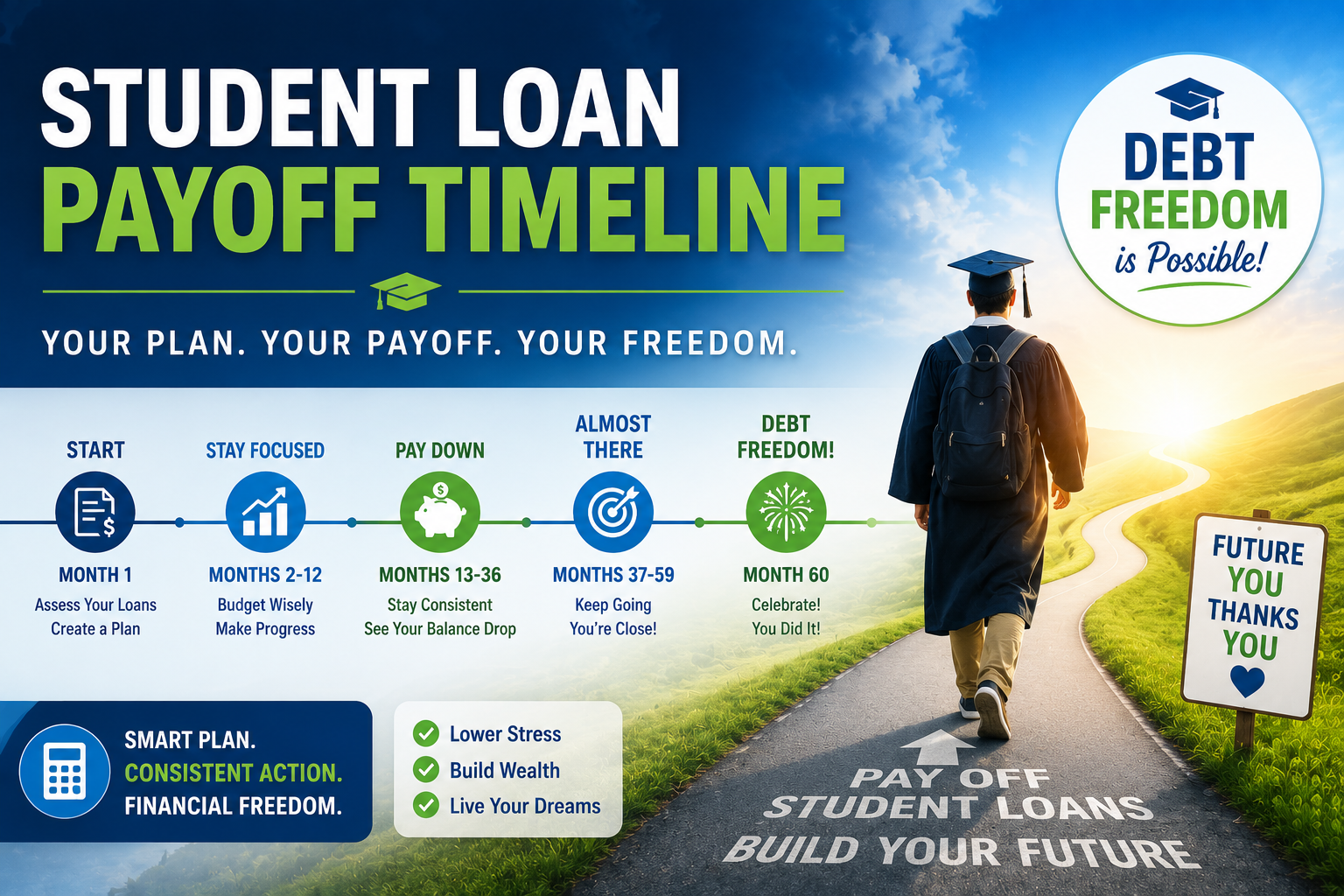
- Your overall debt-free date
- Total interest you will pay
- How different extra payment amounts change your timeline
Understanding your debt-free date is powerful. Instead of a vague sense of “someday I will be debt free,” you have a specific month and year — a goal that is real and measurable.
Step 5 — Build Your Debt Payoff Budget
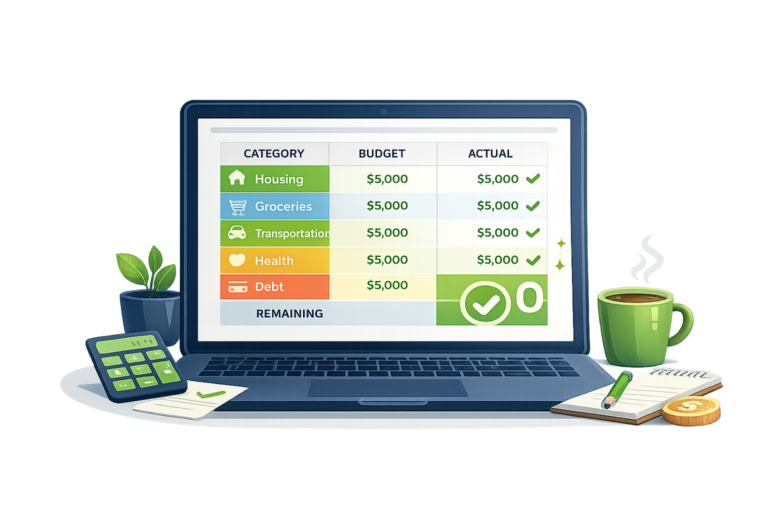
Your debt payoff plan needs to be backed by a monthly budget that actually funds it.
Zero-based budgeting approach:
Assign every dollar of monthly income a job before the month begins. Categories:
- Essential expenses: Housing, utilities, food, transportation, insurance
- Minimum debt payments: All minimums to all creditors
- Extra debt payment: Your targeted extra amount to your focus debt
- Emergency buffer: Small amount to build/maintain emergency fund
- Discretionary: What is left — reduced but not eliminated
If the math does not work with your current income: identify expense cuts and income additions that make it work. Even $50 per month extra makes a meaningful difference over time.
Step 6 — Set Up Automatic Payments
The most important implementation step. Automating minimum payments prevents missed payments and credit damage. Automating your extra payment prevents it from being spent on something else.
Set up:
- Automatic minimum payments on every debt account
- Automatic extra payment transfer to your target debt — scheduled for the day after payday
When the extra payment transfers automatically on payday, you never see the money in your checking account long enough to spend it elsewhere.
Step 7 — Create a Visual Progress Tracker
Debt payoff is a marathon. Visual progress tracking is essential for maintaining motivation over a multi-year journey.
Options:
- Debt thermometer on your refrigerator — colour it in as balances decrease
- Simple bar chart updated monthly
- Undebt.it charts — automatically updated as you record payments
- A simple note on your phone with monthly balance totals
Updating your tracker at the end of each month and seeing the numbers decline is genuinely motivating — particularly once debts start being eliminated entirely.
Step 8 — Plan for Obstacles
Every debt payoff plan encounters obstacles. Planning for them in advance prevents them from derailing your progress permanently.
Unexpected expenses: Your emergency fund (even a small $500 to $1,000 one) handles these without requiring credit card debt.
Income reduction: If income drops, revise your extra payment downward and extend your timeline. Do not abandon the plan — adjust it.
Motivation dips: Plan a non-spending reward for key milestones. Identify your accountability partner before you need them. Keep your written “why” visible.
Social pressure: Prepare brief honest responses for social situations that conflict with your financial plan: “I am focusing on paying off debt this year — can we find a lower-cost option?”
Windfalls: Decide in advance what percentage of any windfall goes to debt. Committing to 100% — or even 80% — before the windfall arrives prevents rationalised spending.
Case Study — The Complete Debt Payoff Plan That Eliminated $31,000 in 4 Years
Kevin and Lisa started their debt payoff journey with $31,000 spread across 6 accounts.
Their debt inventory:
Credit Card 1: $2,200 at 24% APR, $55 minimum
Credit Card 2: $4,800 at 20% APR, $96 minimum
Credit Card 3: $1,100 at 22% APR, $30 minimum
Personal Loan: $7,500 at 14% APR, $165 minimum
Car Loan: $8,900 at 7% APR, $195 minimum
Medical Debt: $6,500 at 0%, $100 minimum
Total minimum payments: $641/month
Monthly surplus after essentials: $900
Extra payment available: $900 – $641 = $259/month
They chose the hybrid method: eliminate Credit Card 3 ($1,100) first for a quick win, then switch to Avalanche (Credit Card 1 at 24% next).
Month 1: Extra $259 on Credit Card 3 + $30 minimum = $289/month. Credit Card 3 paid off by month 4.
Month 5: Rolled $289 toward Credit Card 1 (24% APR) — now paying $344/month on highest-rate card.
Month 15: Credit Card 1 eliminated. Rolled $399 toward Credit Card 2 (20% APR).
Month 25: Credit Card 2 eliminated. Rolled $495 toward Personal Loan.
Month 37: Personal Loan eliminated. Rolled $660 toward Medical Debt.
Month 43: Medical Debt eliminated. Rolled $760 toward Car Loan.
Month 47: Car Loan — paid off!
Result: $31,000 paid off in 47 months. Total interest paid: approximately $7,200. Had they paid minimums only, payoff would have taken 22+ years and cost approximately $31,000 in interest.
“The plan made it feel manageable,” Lisa said. “We could see each debt-free date and knew exactly what was coming. Month 4 when Credit Card 3 disappeared was huge — suddenly it felt real.”
Frequently Asked Questions
How often should I update my debt payoff plan? Review your plan monthly — update balances, note progress, confirm you are on track. Do a more comprehensive review quarterly or when your financial situation changes significantly.
Should I include my mortgage in my debt payoff plan? Most financial advisors recommend focusing on high-interest consumer debt first. Mortgage interest is typically lower, may be tax-deductible and pays down a depreciating asset. Focus on credit cards, personal loans and high-rate debt before extra mortgage payments.
What if I cannot commit to any extra payment right now? Even $25 extra per month is better than nothing — and more importantly, having a plan and the habit of making extra payments creates the foundation for increasing that amount over time. Start with whatever you can and build from there.
Your Debt Payoff Plan — Starting Today:
- Complete debt inventory — every debt, every number
- Calculate monthly surplus
- Choose your method — Snowball, Avalanche or Hybrid
- Go to undebt.it — enter debts and calculate your debt-free date
- Create your monthly budget
- Set up automatic payments
- Create a visual tracker
- Write your why — keep it visible
Financial Disclaimer: Information on DebtZeroFast.com is for educational purposes only and does not constitute financial advice. Always consult a qualified financial advisor for personalised debt management guidance.