
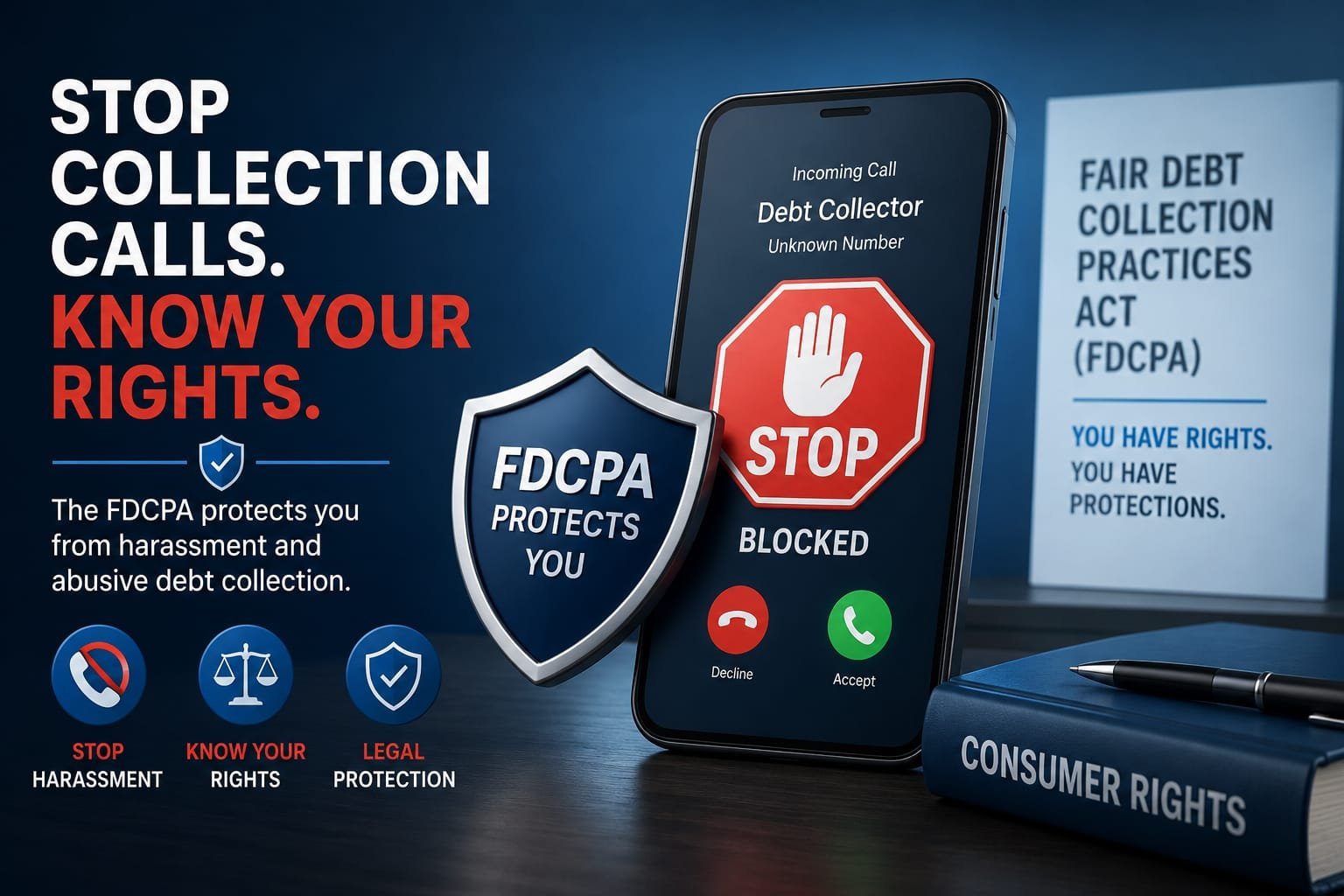
How to Stop Collection Calls Legally: Your Rights Under the FDCPA
Debt collection calls are stressful, disruptive, and sometimes abusive. What most people do not know is that federal law — the Fair Debt Collection Practices Act — gives you powerful rights to stop these calls and protect yourself from collector harassment. This guide explains your rights and exactly how to exercise them.
Your Rights Under the FDCPA
Debt collectors cannot call before 8AM or after 9PM. They cannot call your workplace if you tell them your employer disapproves. They cannot use abusive, threatening, or profane language. They cannot misrepresent the amount owed or make false statements. They cannot threaten actions they cannot legally take. Read our guide on How to Negotiate With Creditors for strategies to address the underlying debt.
How to Stop Collection Calls With a Cease and Desist Letter
Send a written cease and desist letter via certified mail stating: “I am invoking my right under the Fair Debt Collection Practices Act to request that you cease all communication with me regarding this debt.” Once received, the collector can only contact you to confirm they will stop or to notify you of specific legal action.
What Happens After a Cease and Desist
Stopping collection calls does not make the debt disappear. The collector may file a lawsuit to collect. Use the time free from calls to develop a debt payoff strategy. Read our guide on How to Create a Debt Payoff Plan That Actually Works.
Conclusion
You have real legal rights against debt collector harassment. Use them. Send a cease and desist letter to stop abusive calls, document all violations, and report collectors who break the law to the Consumer Financial Protection Bureau.