What Happens to Your Credit Score When You Pay Off Debt? Complete Timeline Guide
One of the most common questions from people working to pay off debt is: what will happen to my credit score? The answer is mostly positive but more nuanced than a simple “your score will go up.” The timing, the magnitude, and the direction of credit score changes from paying off debt depends on what type of debt you are paying off, how you pay it off, and what happens to your accounts after payoff. This complete guide walks through every scenario with realistic expectations at each stage.
Disclaimer: Credit scoring models are complex and results vary by individual credit profile. This is educational information, not financial advice.
How Credit Scores Are Calculated — The Foundation
Understanding credit score calculation is essential context for understanding how debt payoff affects your score. FICO scores — the most widely used credit scoring model — are calculated from five main categories with different weights. Payment history accounts for 35 percent of your score and measures whether you make payments on time. Credit utilization accounts for 30 percent and measures how much of your available revolving credit you are using. Length of credit history accounts for 15 percent. Credit mix accounts for 10 percent and reflects the variety of account types. New credit inquiries account for 10 percent.
This breakdown explains why paying off different types of debt produces different credit score impacts. Credit cards (revolving debt) directly affect the 30 percent credit utilization component — making credit card payoff particularly impactful on credit scores. Installment loans (car loans, personal loans) primarily affect the credit mix component, producing a smaller credit score impact when paid off.
For strategies to accelerate your credit card payoff and its positive credit impact, see our guide on How to Pay Off Credit Card Debt Fast.
Paying Off Credit Card Debt — The Fastest Credit Score Improvement
Paying down credit card balances produces the fastest and most significant credit score improvement of any debt payoff activity, because of its direct impact on credit utilization — the 30 percent component of your score.
Credit utilization is calculated as your total revolving balances divided by your total revolving credit limits. For example, if you have $3,000 in credit card balances across cards with a total limit of $10,000, your utilization is 30 percent. Reducing balances directly reduces this ratio and typically produces credit score improvement within one to two billing cycles — as quickly as 30 to 60 days.
Credit score improvement from utilization reduction can be dramatic. Moving from 80 percent utilization to 30 percent utilization can produce a score improvement of 50 to 100 points or more depending on your overall credit profile. Moving from 30 percent to below 10 percent — generally considered the optimal range — can produce additional improvement. Most credit score modeling suggests keeping utilization below 30 percent and ideally below 10 percent for maximum score optimization.
The timing of when balances are reported to credit bureaus matters for seeing these improvements quickly. Credit card issuers typically report your balance to credit bureaus once per month, usually on your statement closing date. If your payment significantly reduces your balance before the closing date, that improvement shows up in the next reporting cycle. If you pay after the statement closes, it may take another month to appear.
What Happens When You Pay Off a Credit Card Completely
Paying a credit card to zero produces the maximum utilization benefit for that card — a zero balance contributes to lower overall utilization. However, an important question arises: should you close the paid-off card?
The general recommendation is to keep paid-off credit cards open rather than closing them. Here is why: closing a credit card eliminates that card’s credit limit from your total available credit, which increases your utilization ratio on remaining cards. It may also reduce the average age of your credit accounts, which affects the 15 percent length of credit history component. A paid-off card with a zero balance and a high credit limit is actually ideal for your credit score — it contributes available credit without increasing your utilization.
If you are concerned about spending temptation, cut up the physical card or freeze it rather than closing the account. Use it for one small automatic payment per month — a streaming subscription for example — and set up autopay to keep it active without debt.
Paying Off Installment Loans — A More Complex Picture
Paying off installment loans such as auto loans, personal loans, or student loans has a more complex credit score impact than credit card payoff.
During the repayment period, consistent on-time payments on installment loans build positive payment history and contribute to the 10 percent credit mix component. Paying down the loan balance reduces your total debt, which positively affects lender evaluations even if it does not directly affect utilization calculations the way credit cards do.
When you pay off an installment loan completely, there is often a temporary slight decrease in your credit score — typically 5 to 20 points — that surprises many people. This happens because the paid-off loan closes the account, which affects credit mix and potentially average account age. However, this dip is typically temporary. Most people see their scores recover and improve above the pre-payoff level within 3 to 6 months as the long-term benefits of reduced total debt and the continued positive payment history on the account register fully.
The Credit Score Impact of Paying Off Different Debt Types
Medical debt has received specific attention in credit reporting changes in recent years. As of 2023 and continuing into 2026, the major credit bureaus have significantly changed how medical debt is reported. Paid medical debt is now removed from credit reports much faster than before, and medical debt under $500 is excluded from reports entirely. These changes mean paying off medical debt can produce faster and more significant credit score improvements than in previous years. For strategies to reduce or eliminate medical debt, see our guide on How to Get Free Help With Medical Bills on our sister site.
Student loan payoff typically produces modest credit score changes. The payment history built over years of on-time payments is the primary credit benefit of student loans — that positive history remains on your credit report for 10 years after the account closes. The payoff itself may produce a small temporary dip for the same reasons as other installment loan payoffs.
Collection accounts present a special situation. Paying a collection account does not remove it from your credit report — it changes the status from “unpaid collection” to “paid collection,” which is somewhat better but still a negative mark. Collections remain on your credit report for seven years from the original delinquency date regardless of whether they are paid. If you are paying off old collection accounts, understand the timeline implications for when the negative mark will age off your report naturally.
Credit Score Timeline — What to Expect Month by Month
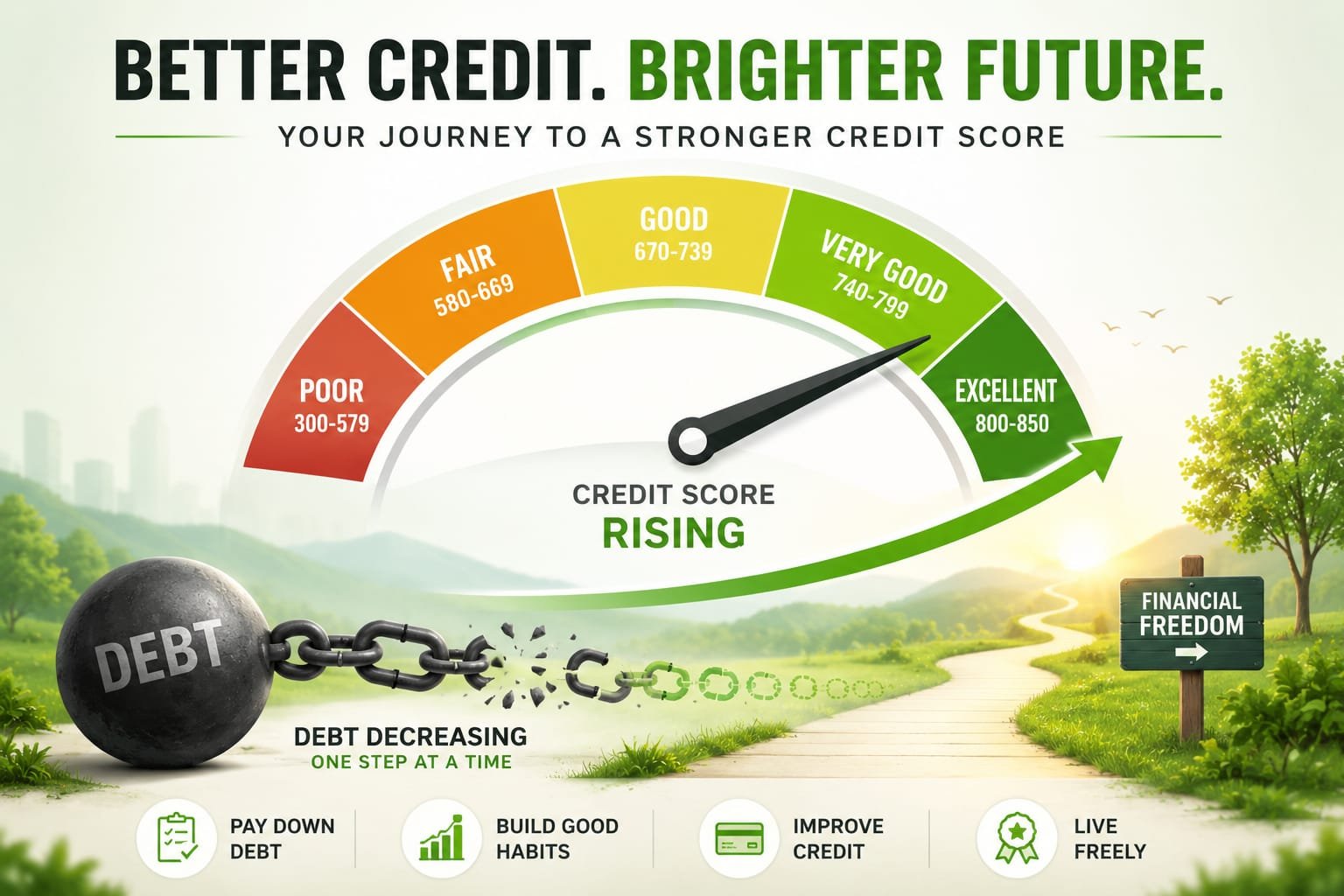
Month 1 to 2: If you pay down significant credit card balances, expect to see improvement in your score within 1 to 2 billing cycles as the lower balances are reported. Month 3 to 6: Continued balance reduction produces continued utilization improvement and score increases. Month 6 to 12: As debt reduction continues and account age increases, credit score improvements compound. Scores that started below 600 from high utilization and missed payments often move into the 650 to 700 range with a year of consistent debt reduction and on-time payments. Year 1 to 2: For scores that started in the 550 to 620 range due to significant debt problems, the 700 threshold is typically achievable within 1 to 2 years of committed debt payoff combined with on-time payments.
Maximizing Credit Score Improvement While Paying Off Debt
Several strategies maximize the credit score benefit of your debt payoff efforts. Never miss a payment during the payoff process — on-time payment history is the single largest factor in your score at 35 percent. Prioritize credit card balances over installment loans for the fastest utilization improvement. Keep paid-off accounts open to maintain available credit. Monitor your credit reports for errors that may be suppressing your score unnecessarily. Use free credit monitoring through Credit Karma or your credit card issuer to track progress and catch issues early.
For the complete debt payoff strategy that optimizes both financial and credit outcomes, see our guides on Debt Snowball vs Debt Avalanche and How to Create a Debt Payoff Plan That Actually Works.
Frequently Asked Questions
How quickly will my credit score improve after paying off debt? For credit card debt, improvement can appear within 30 to 60 days. For installment loans, expect 3 to 6 months for the full positive impact to appear.
Why did my credit score drop after paying off a loan? This common surprise happens because paying off an installment loan closes the account, affecting credit mix and potentially average account age. The dip is typically temporary.
Will paying off all my debt result in a perfect credit score? Not immediately. Credit scores also heavily weight payment history and account age. The highest scores require years of consistent on-time payment history across multiple account types, not just zero debt.
Conclusion
Paying off debt almost always improves your credit score over time, with credit card payoff producing the fastest and largest improvements. The journey from debt-burdened credit to excellent credit is typically 1 to 3 years of consistent debt reduction and on-time payments. Start with the highest-interest credit card balances as described in our guide on How to Pay Off Credit Card Debt Fast and build your complete payoff plan with our guide on How to Create a Debt Payoff Plan That Actually Works.