How to Stop Collection Calls Legally: Your Rights Under the FDCPA
Debt collection calls are among the most stressful experiences associated with financial difficulty. The calls arrive at inconvenient times, the language is often threatening or intimidating, and many people feel powerless to stop them. What most people struggling with debt do not know is that federal law provides powerful protections against collection harassment — and exercising these rights is both legal and straightforward. This complete guide covers everything you need to know to stop collection calls legally and protect yourself from collector violations.
Disclaimer: This content is for educational purposes only and does not constitute legal advice. Stopping collection calls does not eliminate underlying debt obligations. Consult a qualified attorney for advice specific to your situation.
The Fair Debt Collection Practices Act — Your Federal Protection
The Fair Debt Collection Practices Act, passed in 1977 and significantly strengthened since, is the primary federal law governing how third-party debt collectors can interact with consumers. It is important to understand what this law covers: it applies to third-party debt collectors — companies hired to collect debts on behalf of original creditors, or companies that purchase delinquent debts. It does not apply to original creditors collecting their own debts, though many states have laws extending similar protections to original creditor collection practices.
The FDCPA covers most consumer debts — credit cards, medical bills, mortgages, auto loans, and student loans. It does not cover business debts. For strategies to address the underlying debt while you exercise your FDCPA rights, see our guide on How to Negotiate With Creditors.
Prohibited Debt Collector Behaviors — What They Cannot Do
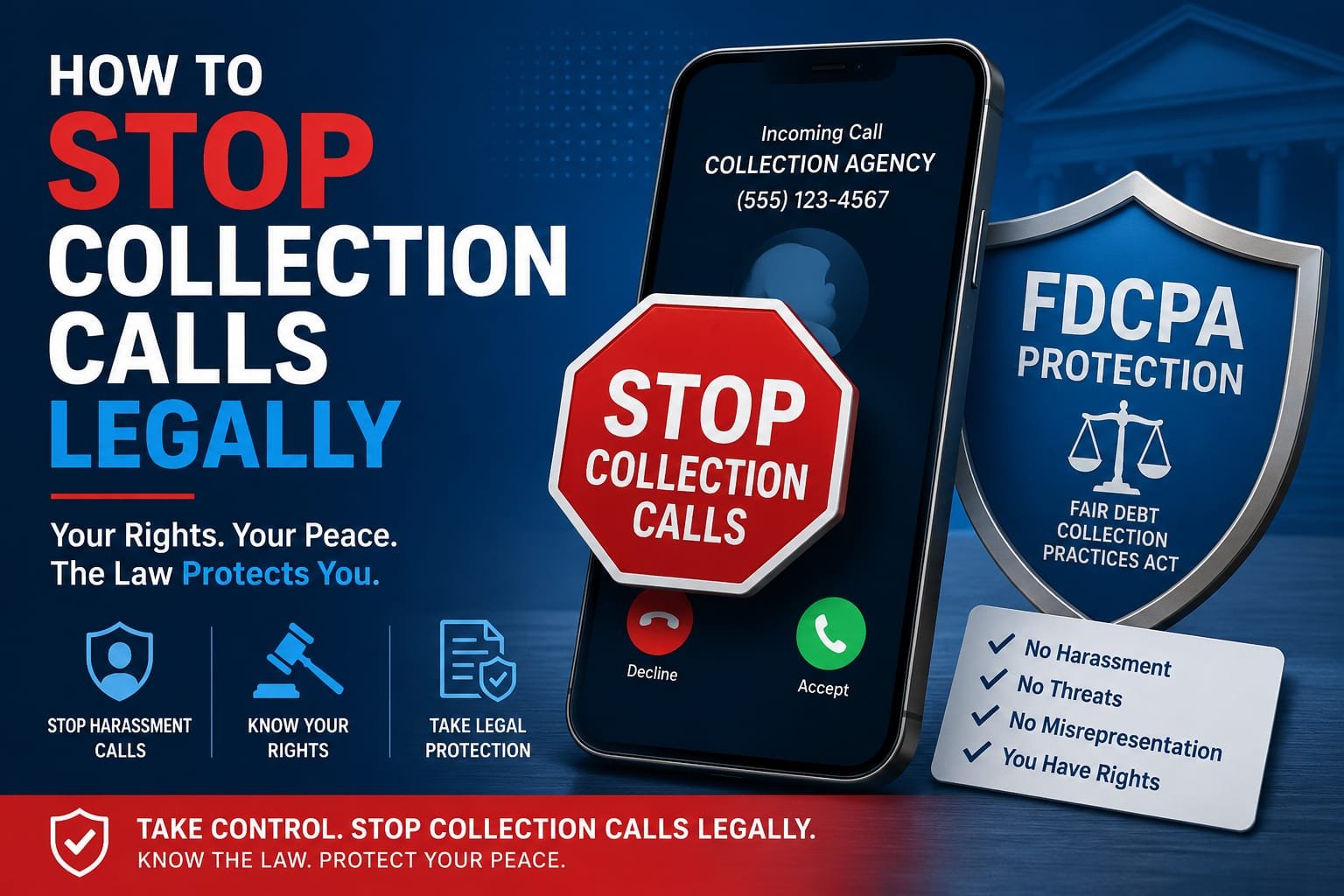
The FDCPA establishes detailed prohibitions on debt collector conduct. Collectors cannot contact you before 8 AM or after 9 PM in your local time zone. They cannot contact you at work if you tell them your employer prohibits such calls. They cannot use abusive, obscene, or threatening language. They cannot falsely imply they are attorneys or government representatives. They cannot threaten to take legal action they do not actually intend to take or are not legally able to take. They cannot misrepresent the amount owed. They cannot add unauthorized fees or interest. They cannot contact third parties — friends, family, employers — about your debt except to locate your contact information. They cannot publish your name on a list of debtors. They cannot contact you after receiving written notice that you refuse to pay or want contact to cease.
Each of these prohibitions, if violated, gives you the right to sue the collector for actual damages plus statutory damages of up to $1,000 per lawsuit, plus attorney fees. Documenting violations is essential for any potential legal action.
Your Right to Request Debt Validation
One of your most powerful rights under the FDCPA is the right to request debt validation. Within 30 days of a collector’s first contact, you can send a written request asking them to verify the debt. During this validation period, the collector must stop all collection activity until they provide verification.
The validation request should ask for: the name and address of the original creditor, the amount of the debt and how it was calculated, verification that the collector is licensed to collect debt in your state, and a copy of any document signed by you that created the original obligation. Many collection attempts, particularly for old debts purchased in debt portfolios, cannot provide this documentation — and the collection activity must stop if they cannot validate.
Send your validation request within 30 days of first collector contact via certified mail with return receipt. Keep a copy and the return receipt permanently.
How to Stop All Collection Calls — The Cease and Desist Letter
The most powerful tool available to stop collection calls is the cease and desist letter. Under the FDCPA, once a collector receives written notice that you want communication to cease, they may only contact you to confirm they will stop collection activity or to notify you of specific legal action they intend to take. All other contact is prohibited.
Here is a sample cease and desist letter you can adapt:
“[Your Name]
[Your Address]
[Date]
[Collection Agency Name]
[Collection Agency Address]
Re: Account Number [Account Number] — Cease and Desist Notice
Dear Sir or Madam:
Pursuant to my rights under the Fair Debt Collection Practices Act, 15 U.S.C. § 1692c(c), I hereby formally request that you cease all communication with me regarding the above-referenced account.
This notice applies to all forms of communication including telephone calls, letters, email, text messages, and any other form of contact.
If you continue to contact me after receiving this notice, I will file a complaint with the Consumer Financial Protection Bureau and consider pursuing my legal remedies under the FDCPA.
Sincerely,
[Your Signature]
[Your Printed Name]”
Send this letter via certified mail with return receipt requested. Keep a copy and the return receipt permanently. The letter is legally effective upon the collector’s receipt.
What Happens After a Cease and Desist
Sending a cease and desist letter stops collection calls — but it does not make the debt disappear. The collector has several options after receiving your letter. They may stop all collection activity entirely. They may send a single letter confirming they will cease contact. They may file a lawsuit to collect the debt through the courts. Or they may return the debt to the original creditor.
Understanding that a cease and desist may accelerate legal action on a legitimate debt is important. If you genuinely owe the debt and have resources to repay it, addressing the debt directly through negotiation may be more productive than stopping contact without a resolution plan. Read our guide on How to Negotiate With Creditors for strategies to address the debt while protecting yourself legally.
Documenting FDCPA Violations
If a collector violates the FDCPA — calls after hours, uses threatening language, contacts your employer after being told not to, or continues contacting you after receiving a cease and desist — document everything systematically.
Keep a call log recording the date, time, collector’s name if given, the name of the collection agency, and a detailed description of what was said. Save all voicemails without deleting them. Keep all written communications including envelopes showing postmark dates. If a collector makes specific false statements or threats, write down the exact words immediately while the conversation is fresh.
This documentation supports both CFPB complaints and potential legal action. Collectors who violate the FDCPA are liable for actual damages, statutory damages up to $1,000, and attorney fees — meaning consumer protection attorneys often take FDCPA violation cases on contingency.
Filing Complaints Against Violating Collectors
The Consumer Financial Protection Bureau at consumerfinance.gov/complaint accepts complaints against debt collectors and actively investigates significant violations. Your state attorney general’s office also handles debt collection complaints and may have state-level protections beyond the federal FDCPA. The Federal Trade Commission at ftc.gov accepts complaints as well, which inform enforcement patterns even when individual complaints do not result in direct action.
Filing complaints serves both your individual interests and the collective interest of other consumers dealing with the same collector. Collectors with patterns of violations face federal and state enforcement actions that can include significant fines and operational restrictions.
State-Level Additional Protections
Many states have debt collection laws that provide protections beyond the federal FDCPA, including extending FDCPA-type protections to original creditors, providing higher statutory damages, extending the coverage to business debts, and providing specific protections for medical debt. California, New York, Texas, Florida, and many other states have active state-level consumer protection laws. Check with your state attorney general’s office or a consumer protection attorney to understand your state-specific rights.
Handling the Statute of Limitations on Old Debts
Every debt has a statute of limitations — the period during which a creditor can sue you to collect. After this period expires, the debt becomes “time-barred” and a collector cannot legally sue to collect it, though they can still attempt to collect voluntarily. Making even a small payment on a time-barred debt can reset the statute of limitations clock in some states, which is why understanding the age of any debt you are being contacted about is critically important.
If you believe a debt may be time-barred, do not make any payment or verbal acknowledgment of owing the debt without first understanding your state’s statute of limitations for that debt type and verifying the age of the debt. Consult a consumer protection attorney for guidance on time-barred debts.
Balancing Legal Protections With Debt Resolution
FDCPA protections are most powerful when used as part of a comprehensive debt management strategy rather than as a way to avoid legitimate obligations indefinitely. Stopping calls gives you breathing room to develop a plan. Use that time to assess your complete debt picture, explore negotiation options from our guide on How to Negotiate With Creditors, and build a realistic payoff plan using the strategies in our guide on How to Create a Debt Payoff Plan That Actually Works.
Frequently Asked Questions
Does stopping collection calls hurt my credit? Exercising your FDCPA rights and sending a cease and desist does not itself affect your credit. However, the underlying debt that is in collections has likely already affected your credit.
Can original creditors still call after I send a cease and desist to a collector? The FDCPA applies to third-party collectors, not original creditors. However, your state may have laws that extend similar protections to original creditors.
What if a collector keeps calling after receiving my cease and desist? This is a direct FDCPA violation. Document each call, file complaints with the CFPB and state attorney general, and consult a consumer protection attorney about potential legal action.
Do I need a lawyer to send a cease and desist letter? No. The sample letter in this guide is sufficient. An attorney is not required.
Conclusion
The FDCPA gives you powerful, legally enforceable rights against debt collection harassment. Know these rights, document violations systematically, use the cease and desist process to stop unwanted contact, file complaints when collectors violate the law, and understand that these protections work best when combined with a genuine plan to address the underlying debt. Read our complete guides on How to Negotiate With Creditors and Debt Snowball vs Debt Avalanche to build that comprehensive plan.