How to Pay Off $20,000 in Debt in 2 Years (Step-by-Step)
Twenty thousand dollars in debt feels enormous. But it’s not insurmountable — and with the right plan, 2 years is a realistic timeline for most people. This guide breaks it down into a step-by-step system that’s worked for thousands of people who started exactly where you are right now.
Let’s be clear upfront: paying off $20,000 in 24 months requires about $833/month in debt payments above your minimums. That’s real money — but the strategies below show you how to find it, even if your budget currently feels airtight.
Step 1: Get a Complete Picture of What You Owe
Before you can attack debt, you need to know exactly what you’re dealing with. List every debt with these five columns: creditor name, balance, interest rate, minimum payment, and due date. Include everything — credit cards, personal loans, medical bills, car loans, student loans.
Pull your free credit report at AnnualCreditReport.com to make sure you haven’t missed anything. Many people discover forgotten collection accounts or medical bills they didn’t realize were still active.
Step 2: Calculate Your Target Monthly Payment
For $20,000 paid off in 24 months at an average 20% APR, you’ll need approximately $1,010/month in total debt payments. Here’s how to find that money:
- Current minimums: Calculate what you’re already paying across all debts
- Extra needed: $1,010 minus your current minimums = the gap to close
- Sources: Budget cuts, income increases, or a combination
Step 3: Cut Your Budget With a Zero-Based System
A zero-based budget assigns every dollar a job before the month begins. Most people who switch to zero-based budgeting find $200–$500/month they weren’t tracking. Download our free zero-based budget template and go through every spending category line by line.
Common cuts that add up fast: unused subscriptions ($50–$150/month), eating out ($200–$400/month), impulse Amazon purchases ($100–$200/month), and premium cable or streaming bundles ($80–$150/month).
Step 4: Choose Your Payoff Method
The two proven methods are the debt snowball and the debt avalanche. See our detailed debt snowball vs avalanche comparison for the full breakdown — here’s the quick version:
- Debt Snowball: Pay smallest balances first. Best for motivation. Higher success rate.
- Debt Avalanche: Pay highest interest rates first. Saves most money. Best for disciplined budgeters.
For most people with $20,000 in debt, the snowball method works better because it creates early wins that keep you going through month 18 when motivation would otherwise fade.
Step 5: Negotiate Your Interest Rates
Before you pay a single extra dollar, call each credit card company and ask for a rate reduction. Script: “Hi, I’ve been a customer for X years and always pay on time. I’m working hard to pay down my balance and I’d like to request a lower interest rate. I’ve been pre-approved for a balance transfer at [competitor rate] but I’d prefer to keep my account with you.” About 70% of customers who ask receive a reduction.
Even a drop from 24% to 18% APR on $10,000 saves $600/year — money that goes directly to principal.
Step 6: Find $300–$500 in Extra Monthly Income
Budget cuts alone may not get you to your target payment. Adding income on the other side of the equation accelerates everything. Options that work in 2026:
- Freelance your skills on Fiverr or Upwork — writing, design, data entry, social media
- Grocery or food delivery via Instacart or DoorDash on weekends
- Sell unused items — Facebook Marketplace, eBay, Poshmark
- Tutoring or teaching your expertise locally or online
- Overtime or a temporary part-time job
Treat every dollar of extra income as earmarked for debt — don’t let it disappear into general spending.
Step 7: Automate Your Debt Payments
Automation is the secret weapon of successful debt payoff. Set up automatic payments for at least your minimums on every account. Then set up a separate automatic transfer to your highest-priority debt on each payday. When you automate, you remove the willpower requirement — the money moves before you have a chance to spend it.
Step 8: Track Progress Monthly
Every month, update your debt list and calculate your total balance. Watching that number decrease is genuinely motivating. Use one of the tracking apps in our guide to the best debt payoff apps or a simple spreadsheet. Celebrate milestones: first $1,000 paid off, halfway point, last $5,000 remaining.
Your Month-by-Month Milestones
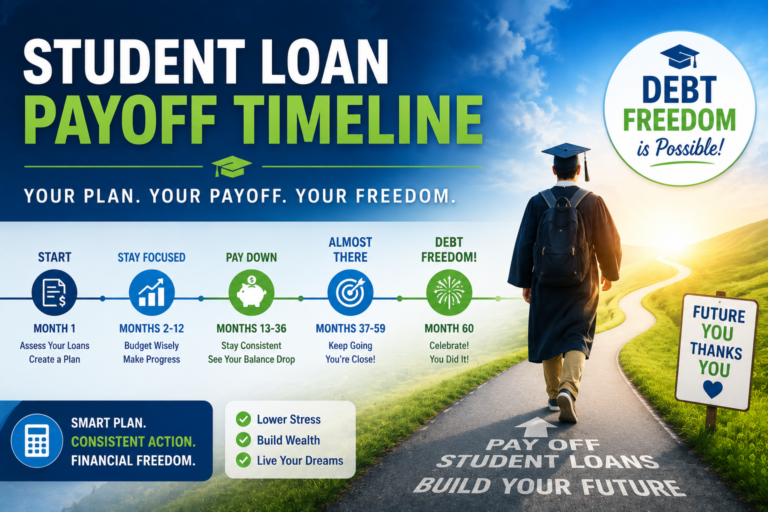
Month 1–3: Set up budget, automate payments, negotiate rates, start side income
Month 4–8: First debt paid off if using snowball. Momentum building.
Month 9–15: Mid-journey plateau — maintain systems, increase income if possible
Month 16–20: Final 1–2 debts, accelerating fast as rolled payments compound
Month 21–24: Final sprint. Finish line in sight.
What If Life Happens?
Unexpected expenses will occur. This is inevitable. Two things protect you: a $1,000 emergency fund (build this before starting your payoff sprint) and a “restart rule” — if a month goes off-plan, you restart the next month without guilt or self-judgment. One bad month doesn’t ruin a 24-month plan. Quitting does.
Frequently Asked Questions
Is $20,000 in debt a lot?
The average American carries about $6,000 in credit card debt alone. $20,000 is significant but absolutely manageable with a focused plan. Thousands of people pay off more than this every year on average incomes.
Should I use debt consolidation to pay off $20,000?
Debt consolidation can be a useful tool if it significantly lowers your interest rate. It works best when you can qualify for a personal loan at 10–14% to replace credit card debt at 20–28%. It doesn’t solve the spending behavior that created the debt — that requires the budgeting work above regardless.
What if I can’t find an extra $833/month?
Extend the timeline. $500/month extra pays off $20,000 in approximately 3 years at 20% APR. $350/month takes about 4 years. A longer timeline is still infinitely better than minimum payments forever. Start with what you can and increase as your income grows or expenses drop.
Final Thoughts
Paying off $20,000 in 2 years is achievable. The math works. The strategies work. The only question is whether you build and maintain the systems consistently enough to see it through. Start today with Step 1 — write down every debt you owe. That single action changes the relationship between you and your debt from avoidance to confrontation, and confrontation is where payoff begins.