How to Get Out of Debt on a Low Income
The most frustrating debt advice is written for people who have money to spare. “Just put an extra $500 a month toward debt” is not helpful when your budget is already stretched to the limit. This guide is specifically for people navigating debt on a limited income — where every strategy has to earn its keep and there’s no margin for approaches that don’t actually work.
Step 1: Know Exactly What You Owe and What Comes In
Start with complete clarity. List every debt: balance, interest rate, minimum payment. List every income source: regular pay, irregular pay, benefits, any other cash coming in. List every expense from your last 2 months of bank statements — every single transaction. Most people on tight budgets are surprised to find $50–$150/month in small recurring charges they forgot about or stopped using.
Step 2: Apply for Every Benefit You’re Entitled To
Many people on low incomes leave significant assistance unclaimed. Before attacking debt, make sure your income is maximized through benefits you’ve earned:
- SNAP (food assistance): Benefits.gov eligibility checker
- LIHEAP (utility assistance): Help with heating and cooling bills
- Medicaid: Free or low-cost health coverage
- EITC (Earned Income Tax Credit): Many eligible low-income workers don’t claim this. Average credit in 2025: $2,541
- Child Tax Credit: If you have children, verify you’re receiving the full amount
- Local emergency assistance: Community Action Agencies (communityactionpartnership.com) offer emergency utility, food, and rent assistance
Even qualifying for SNAP at $200/month in grocery benefits frees $200/month that was previously going to food — money that can now go to debt.
Step 3: Find Every Dollar in Your Existing Budget
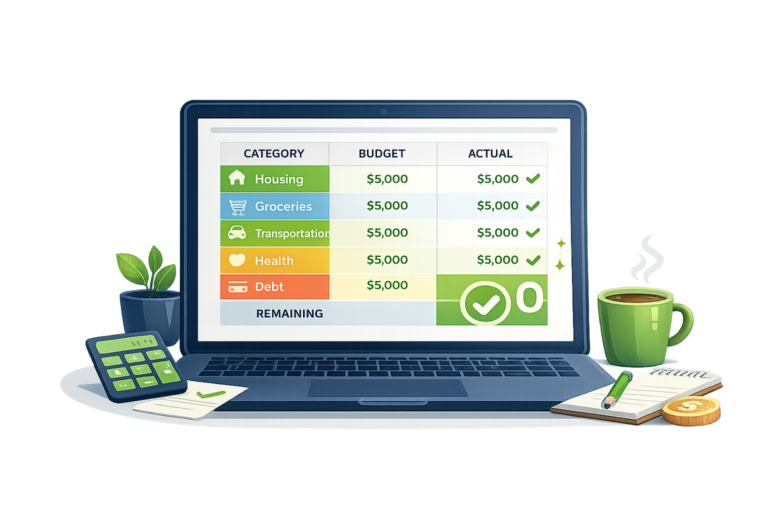
Use a zero-based budget to account for every dollar — download our free zero-based budget template. When income is tight, go through each category with this question: “Is this essential for survival or employment right now?” Categories that survive that test stay. Everything else gets paused or eliminated temporarily.
Specific cuts that have zero impact on daily quality of life for most people:
- Streaming services: rotate rather than keeping all simultaneously (save $20–$60/month)
- Cell phone plan: switch to Mint Mobile, Visible, or similar MVNO carriers ($25–$35/month plans)
- Grocery strategy: generic brands + meal planning + no pre-packaged convenience items (save $100–$200/month for a family)
- Subscription audit: gym, magazines, apps, Amazon Prime, software you rarely use
Step 4: Call Every Creditor and Explain Your Situation
Creditors have programs specifically for people experiencing financial hardship. Before you miss a payment, call and use the hardship script from our guide to negotiating with creditors. Key programs available:
- Hardship interest rate reductions: Some creditors will drop rates to 0–6% for 6–24 months
- Reduced minimum payments: Temporarily lower your required minimum
- Payment deferrals: Skip 1–3 payments without penalty during hardship
- Medical bill negotiation: Hospitals almost always negotiate — many have charity care programs that forgive bills entirely for qualifying income levels
Step 5: Generate Additional Income — Realistically
Even $100–$200/month in extra income accelerates your payoff significantly. Approaches that work without significant upfront investment:
Zero Investment Required
- Sell everything you don’t need: Facebook Marketplace, eBay, Poshmark, local buy/sell groups
- Offer a specific service in your neighborhood: lawn care, dog walking, babysitting, house cleaning
- Donate plasma: $50–$100/week at plasma centers (first-time donor bonuses often run $400–$600/month for the first 2 months)
- Participate in paid studies: universities and market research companies pay $50–$200 for research participation
Small Investment (Under $50)
- TaskRabbit for odd jobs and moving help
- Instacart or DoorDash (use your existing car, earn $15–$25/hour in most markets)
- Fiverr for any digital skill you have (writing, data entry, design, voiceover)
Step 6: Prioritize Which Debts to Pay First
On a limited income, not all debts are equally urgent. Prioritize in this order:
- Debts with immediate consequences: Rent, mortgage, utilities, car payment (if you need the car for work)
- Debts with wage garnishment risk: IRS tax debt, child support — these can garnish wages
- Highest interest rate unsecured debts: Credit cards at 20%+ are financial quicksand
- All other unsecured debts: Medical bills, personal loans, collection accounts
Step 7: Explore Nonprofit Assistance
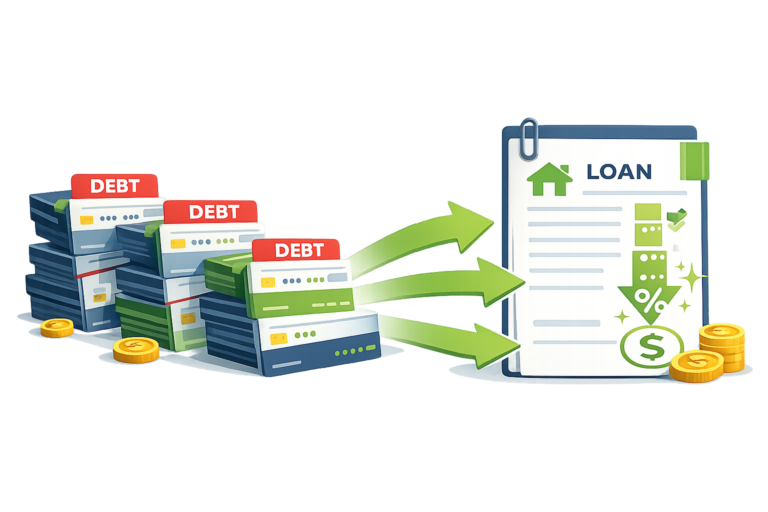
Nonprofit credit counseling agencies offer Debt Management Plans (DMPs) that can reduce interest rates significantly and consolidate payments — without the credit damage of debt settlement. Look for NFCC (National Foundation for Credit Counseling) member agencies, which are required to offer services at low or no cost. A DMP can drop credit card rates to 6–10% regardless of your current rate. This is one of the most underused tools for low-income debt payoff.
What to Do If You Can’t Afford Minimums
If your income genuinely cannot cover minimum payments on all debts, you have three options: debt management plan through a nonprofit (above), debt settlement through a company like reviewed in our National Debt Relief review, or bankruptcy (Chapter 7 can be filed for free with a fee waiver if income is below 150% of federal poverty level). None of these options is without consequences, but all are better than paralysis.
Frequently Asked Questions
Can I get out of debt making $30,000/year?
Yes — it requires more time and more creative income generation, but it’s absolutely possible. $30,000/year is approximately $1,900–$2,100/month take-home. With a tight budget and $100–$200 in extra income monthly, $10,000–$15,000 in debt can be eliminated in 3–4 years.
Should I pay off debt or save first on a low income?
Save a $500–$1,000 emergency fund first — even a small buffer prevents you from going back to credit cards for every unexpected expense. After that, attack high-interest debt aggressively.